- Politics
- Life
Victoria's Pandora Avenue fencing reflects a global debate over how to fix homelessness
For more than 18 months, blue construction fencing has lined the 900-block of Pandora Avenue in downtown Victoria, erected by the city to stop tents from returning to the boulevard outside Our Place Society. City crews began the fencing in September 2024, after Victoria police cleared an encampment that had grown through the pandemic, following the assault of a paramedic responding to a call on the block that July 12. Mayor Marianne Alto said in June 2026 that some fencing would come down on a trial basis, but stopped short of a timeline for its full removal 3.
The block remains a flashpoint. Even after the fencing and a major cleanup, the mayor said the 900-block of Pandora typically still sees about 100 people during the day 3.
Victoria is far from alone in wrestling with visible street homelessness, and cities elsewhere have tried sharply different approaches, resting on different ideas about what causes homelessness and what governments owe the people living in it.
Two competing philosophies
The dominant model in Canada and much of the United States since the 2000s is "Housing First": moving people directly from the street into permanent housing, without requiring sobriety, treatment or "housing readiness" first, then offering voluntary support services 4. Its proponents describe it as a rights-based approach — "housing is not contingent upon readiness... it is a rights-based intervention rooted in the philosophy that all people deserve housing" — built on harm reduction and client self-determination 45.
The rival school, "Treatment First," holds that housing alone does not resolve the addiction and mental illness that put many people on the street, and that programs should require engagement with treatment before granting permanent, unsubsidized housing 5. Its advocates argue Housing First "does not address the root cause of homelessness nor incentivize any behavioral changes" and can concentrate drug use and psychosis into permanent housing complexes 67. A Veterans Affairs study comparing the two found Housing First cut long-term mortality and dramatically increased housing stability, while Treatment First's gains were concentrated in people who stayed inside transitional programs and often did not last once they left 5.
Layered on top of that services debate is a separate legal one: whether cities can clear encampments at all. In Canada, that question was largely settled by Victoria itself. In Victoria (City) v. Adams, the B.C. Supreme Court ruled in 2008 that the city could not enforce a bylaw against erecting temporary shelter in parks when shelter beds were insufficient, because doing so violated homeless people's Charter right to life, liberty and security of the person; the Court of Appeal upheld that finding in 2009 22. The ruling has since been extended by courts in Waterloo and elsewhere, which found that shelter spaces must be practically accessible, not just numerically available, before a city can remove an encampment 22. Lawyers describe Adams as "a check on municipal action," not a free pass for encampments, but a constraint on bylaws that leaves people with nowhere else to go 22. That is a marked contrast with the United States, where the Supreme Court ruled in June 2024 that cities may fine or arrest people for camping even without shelter space available, clearing the way for outright camping bans in states like California and Oregon 23.
In British Columbia, the province decriminalized small amounts of illicit drugs in 2023, then partially reversed that policy in May 2024 to recriminalize public drug use after complaints about open consumption in parks, hospitals and transit 8. Researchers studying the reversal found it disproportionately affected people experiencing homelessness, who lack private space to use drugs and became more visible to police enforcement as a result 9.
Below the philosophy: how services are actually built
Housing First and Treatment First describe a city's overall philosophy, but most of the practical decisions facing any city sit a level below that: what kind of bed to fund, and for whom. Broadly, there are two structures. Permanent supportive housing comes with no time limit and is paired with ongoing clinical and social supports for people with the highest needs 28. Rapid rehousing instead provides temporary financial assistance meant to move people into market housing and then taper support off, on the premise that most people who become homeless need only a short bridge back into the rental market rather than lifelong support 29. British Columbia is the only province with a legislated definition of supportive housing, written into its Residential Tenancy Regulation and Assessment Act 28.
A second structural choice is whether shelters require sobriety. So-called "dry" shelters bar anyone who is intoxicated or using; "wet" shelters admit people who are actively drinking or using drugs, on the premise that substance use is "a public health, not criminal justice, issue" and that people can be helped without first giving up their addiction 26. Critics of wet shelters call them an enabling environment; supporters argue they keep people out of hospitals, jail and the weather who would otherwise refuse a dry bed altogether 26.
A third choice is whether to tolerate encampments at all while housing catches up, rather than treating every tent as something to be cleared or fenced off. Halifax has designated nine sites where people can lawfully camp, arguing that doing so avoids criminalizing homelessness and lets outreach workers concentrate their visits 23. Hamilton now permits encampments of five tents or fewer in parks, kept back from schools and daycares, alongside a privately funded "Tiny Shelters" pilot of heated cabins meant as a stepping stone to permanent housing 25. Kitchener took that further with A Better Tent City, a permanent, staffed village of 42 small homes with shared bathrooms and a kitchen, built specifically for people who struggled in conventional shelters 24. None of these is Housing First or Treatment First; they are answers to a narrower question of what to do with people while permanent housing is unavailable, and they differ sharply from Victoria's approach of fencing an area off entirely.
What different models have produced
Finland is the case most often cited internationally. After adopting Housing First nationally in 2008, alongside a large public building programme, long-term homelessness fell 68 per cent by 2022, and Helsinki now has only one 50-bed emergency shelter 1011. Officials there say housing alone would not have worked: "there is no way you will eradicate homelessness without a serious, big-picture housing policy," said Helsinki senior planning officer Riikka Karjalainen, noting the city owns much of its land and runs its own construction company 11.
Houston adopted Housing First in 2011 and has cut regional homelessness by 63 per cent, moving more than 25,000 people into housing, according to the Coalition for the Homeless of Houston-Harris County 12. A Cato Institute analysis attributes much of that success to Houston's unusually elastic, low-cost housing supply — the city has no traditional zoning code — arguing that "adopting a Housing First approach nationally is unwise" without similar housing conditions 13.
Medicine Hat, Alberta, became the first Canadian city to reach "functional zero" chronic homelessness in 2021, after committing to Housing First in 2009 and building a coordinated, data-driven system with a "by-name list" of everyone unhoused 14. Housed clients saw a 28 per cent drop in hospital days and a 66 per cent drop in jail days 15, because, as a local program manager put it, "all too often we have seen homeless people unable to deal with health or legal issues because of their situation" 15. But the city's unhoused population began climbing again within a year, in part because some people declined available housing — a reminder that Housing First is explicitly voluntary 15.
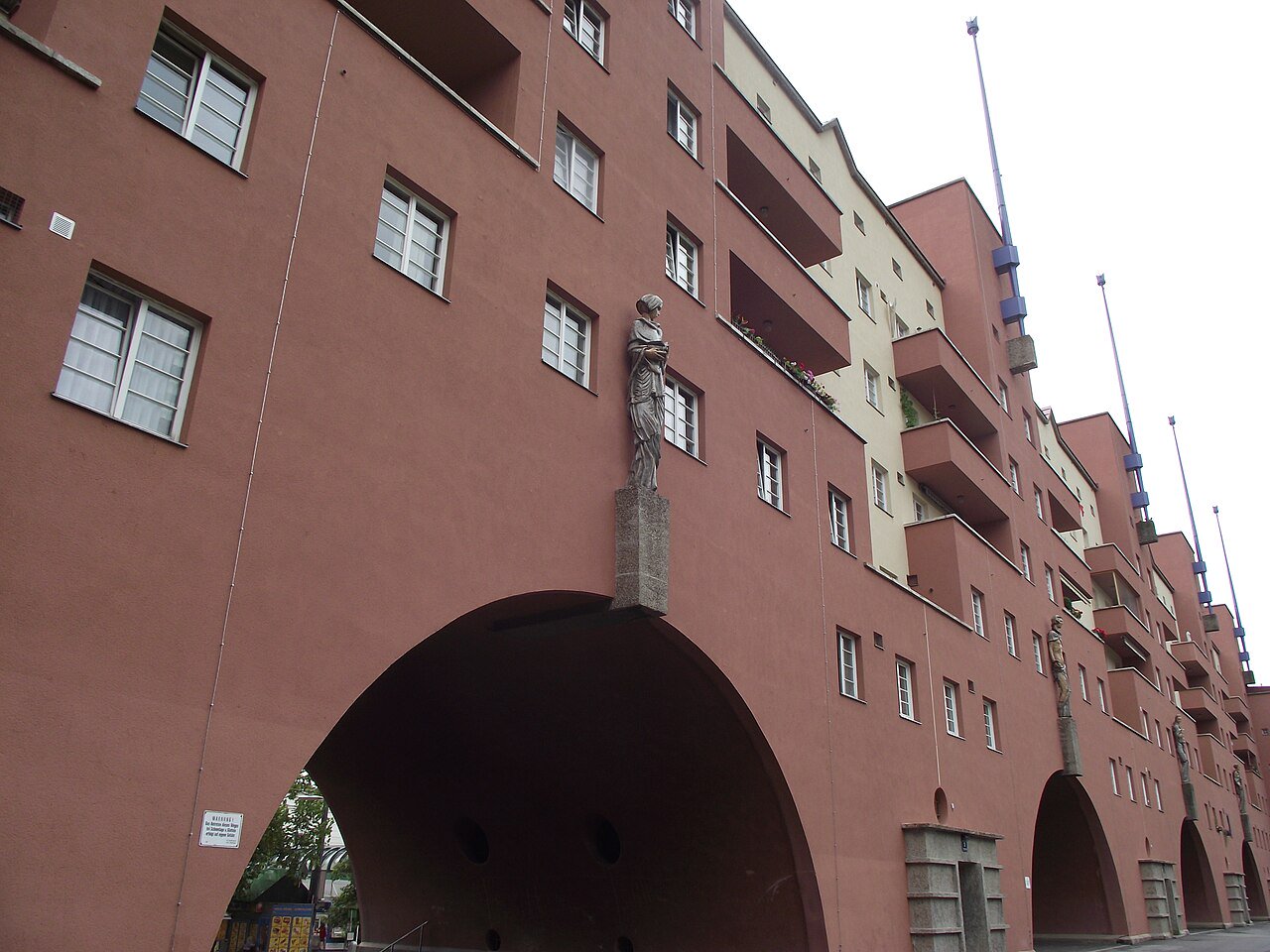
Vienna offers a different model entirely: rather than a targeted homelessness programme, roughly 60 per cent of the city's population lives in city-owned or rent-regulated "social housing," insulating them from market swings before they ever become homeless 1617. The city credits strict rent regulation, public land ownership and open-ended tenancies with a result that would be unrecognizable in most North American cities: "Vienna has virtually no visible homeless population and no slum areas of low-quality housing and concentrated poverty," according to a report on the city's model 17.
California illustrates the risk of spending without a model. A 2024 state audit found California had spent $24 billion on homelessness over five years without consistently tracking whether the money worked, even as homelessness kept rising 18. Permanent supportive housing units in Los Angeles have cost more than $700,000 apiece to build, sharply limiting how many people the money can house 19.
Portland, Oregon, is where Victoria's model is often said to originate. Since Mayor Bud Clark's 1986 "Breaking the Cycle of Homelessness" plan, the city has followed a "hub" model: concentrating shelters, day services, storage and outreach into a small number of central sites rather than spreading them across the city, on the theory that clustering services makes them easier for outreach workers to run and for people to find. That approach was most recently consolidated under "Portland Solutions" in 2024, a single centralized program hub meant to coordinate the city's response 20. Multnomah County's own count still shows more than 7,000 people living unsheltered 20.
Where Victoria sits
Victoria's response has drawn from several of these traditions at once, without settling clearly on one. The city has leaned on BC Housing's pandemic-era hotel conversions and supportive housing, a Housing First-style intervention, funded in part through the region's Reaching Home programs 27. In greater Victoria, the Capital Regional District funds both of the structural models described above under Reaching Home: Pacifica Housing's Streets to Homes program does rapid, scattered-site rehousing 27, while Our Place Society runs a tenancy-support program for people moving out of shelter or supportive housing into independent units 27, with intake meant to run through a single "Coordinated Access" system 27. At the same time, Victoria has also concentrated shelters and outreach services around Pandora Avenue, in a manner that echoes Portland's hub model. Since 2024 it has added fencing, working within the limits that Adams v. Victoria itself set: the city cannot simply ban shelter where none is available, so it has instead added beds and closed off the boulevard rather than banning tents outright 22. Officials have not published data showing how many people who left Pandora were ultimately housed versus displaced to nearby streets; Our Place Society said in January 2025 that it had added 20 nightly shelter beds to help clear the block, and that they were full every night 21, while tents kept appearing on the 800- and 1000-blocks of Pandora and side streets 21.
That mirrors the core finding of California's audit: the absence of consistent outcome tracking makes it hard for any city to know which parts of its approach are working, and which are simply moving the same problem down the block.
Sources
- $4.7 million to prohibit sheltering on Pandora Avenue, says report
- More fences installed as City of Victoria works to end Pandora encampment
- Some fencing on Pandora to be removed after cleanup, Victoria mayor says
- Housing First
- Should homelessness interventions target housing or mental health treatment?
- "Housing First": Homing In on the Problem
- The "Housing First" Approach Has Failed: Time to Reform Federal Policy and Make it Work for Homeless Americans
- British Columbia to recriminalize use of drugs in public spaces
- Decriminalization undone: Assessing the amendment to British Columbia's decriminalization of personal drug possession framework
- Housing First Policy: Finland
- 'It's a miracle': Helsinki's radical solution to homelessness
- Houston has success with "Housing First" strategy
- Housing Markets First: Housing Supply and Affordability Are Key to Reducing Homelessness
- Medicine Hat becomes first city in Canada to end chronic homelessness
- How a Small Canadian City Took on Chronic Homelessness
- Overview of the Vienna Social Housing System
- We Should Look to Vienna for Answers to Our Housing Crisis
- California spent billions on homelessness without tracking if it worked
- The Homelessness Industry Is Booming. The Results Are Not.
- Homelessness in Portland: Responding to Crisis
- Embedded: Why is there so little change on the 900-block of Pandora, after an end-of-year 'deadline'?
- A tale of two tent cities: What rulings in Ontario and B.C. mean for homeless encampments, TVO
- What happened when a Canadian city stopped evicting homeless camps, BBC News
- For this affordable-housing advocate in Ontario, tiny homes are where the heart is, The Christian Science Monitor
- Why Hamilton is now permitting homeless encampments and tiny homes in parks, Macleans
- Homelessness--Assistance Models and Funding, Connecticut General Assembly Office of Legislative Research
- Reaching Home, Capital Regional District
- Research Highlights: Defining Supportive Housing in Canada, New Housing Alternatives
- Housing Programs: Rapid Rehousing vs. Supportive Housing, HOM Inc.